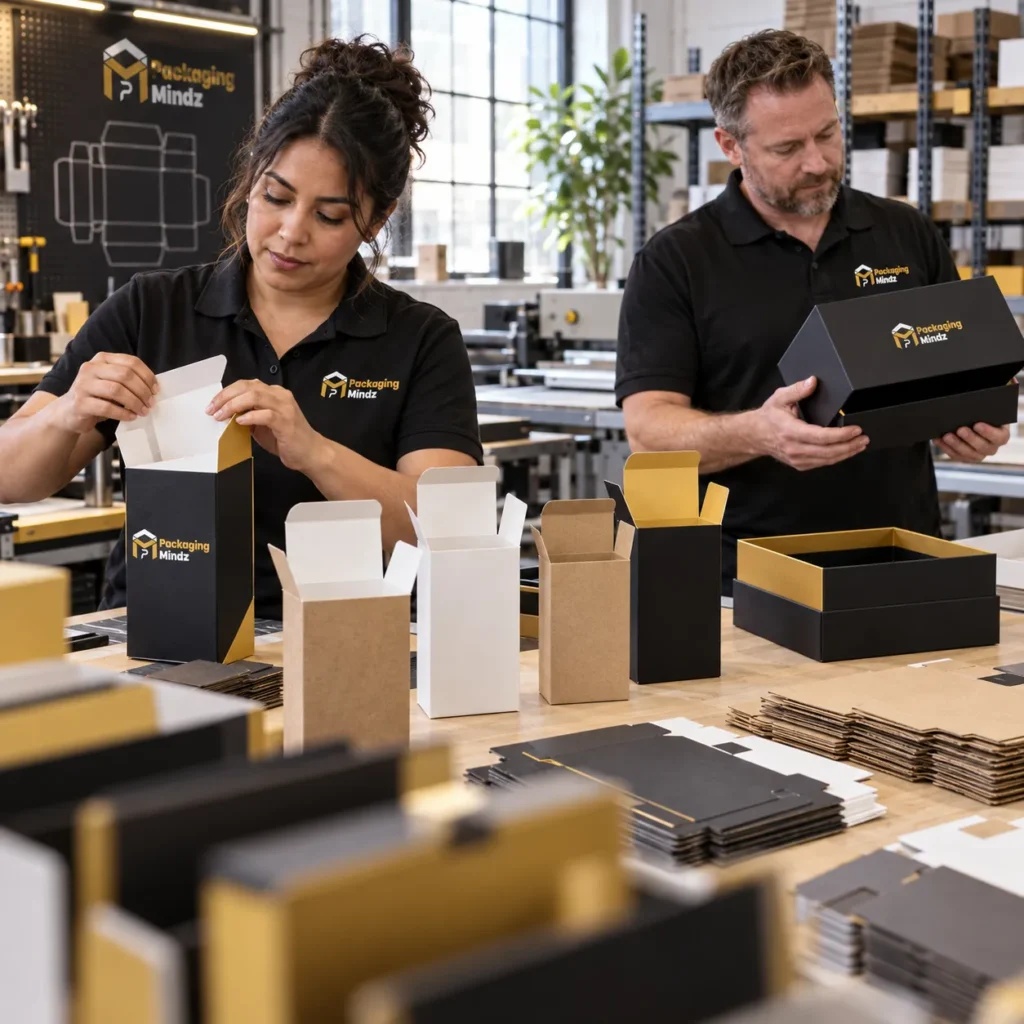
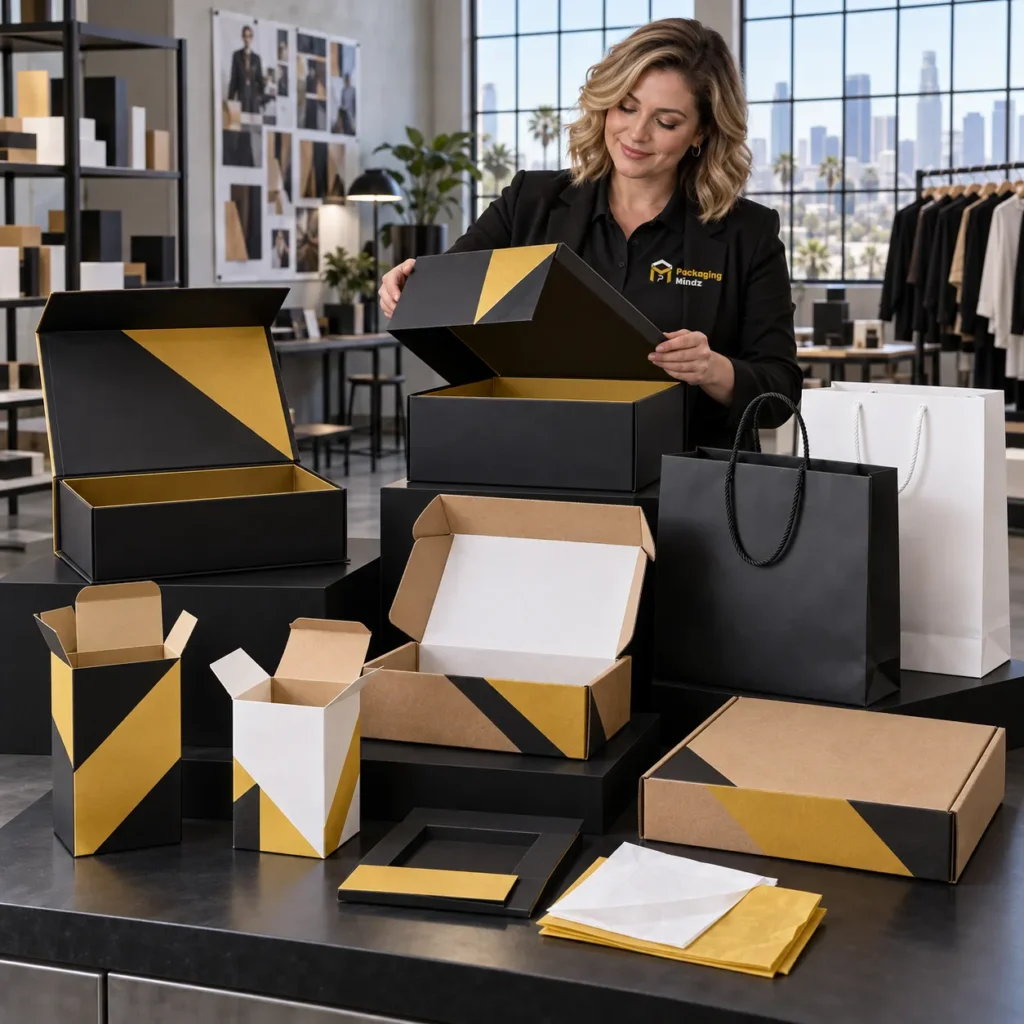
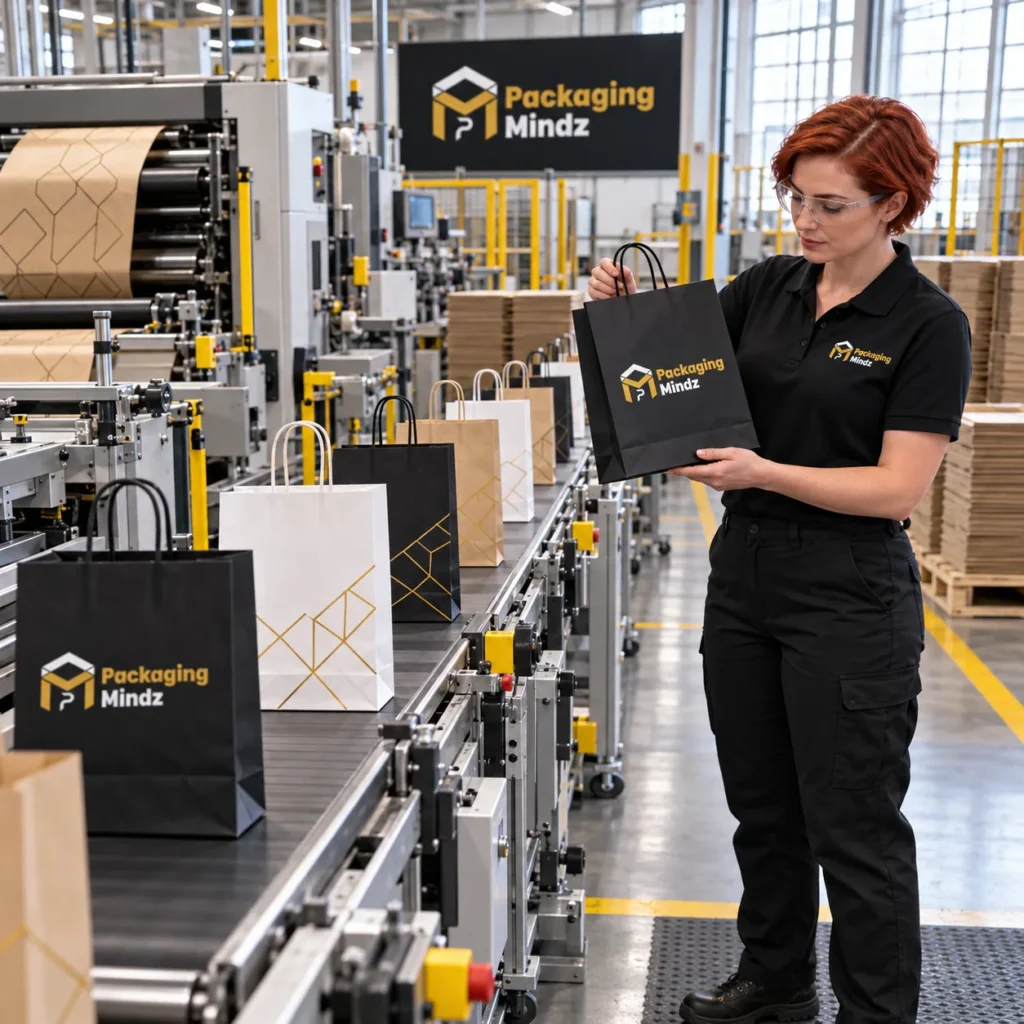
Clothing packaging has to fit the folded garment, work at the packing table, and arrive looking intentional. Packaging Mindz produces custom apparel packaging for fashion labels, boutiques, ecommerce sellers, subscription brands, uniform suppliers, and clothing businesses across the United States.
We can build packaging around shirts, hoodies, knitwear, lingerie, accessories, sets, or mixed garment orders. Bring your dimensions, artwork, quantity, preferred structure, and presentation goals. Fit comes first. Once the structure is right, print and finishing can support the brand without fighting an oversized or poorly proportioned box.
Send your garment dimensions and quantity to start a custom quote.
A box used on a boutique counter has a different job from packaging moving through parcel delivery. Your sales channel should guide the structure before paper, print, or decorative finishes are selected.
| Apparel Use | Packaging Format | Practical Reason |
|---|---|---|
| Folded shirts and tops | Folding cartons | Clean retail presentation with efficient storage |
| Hoodies and heavier garments | Corrugated mailer boxes | More structure for bulkier clothing |
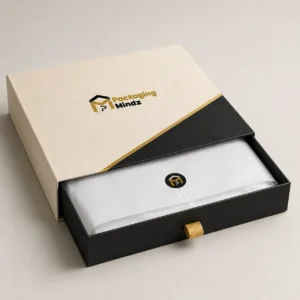
| Luxury clothing and gifting | Rigid boxes | Formal presentation for higher value products |
| Accessories | Sleeves or compact cartons | Keeps the package proportionate |
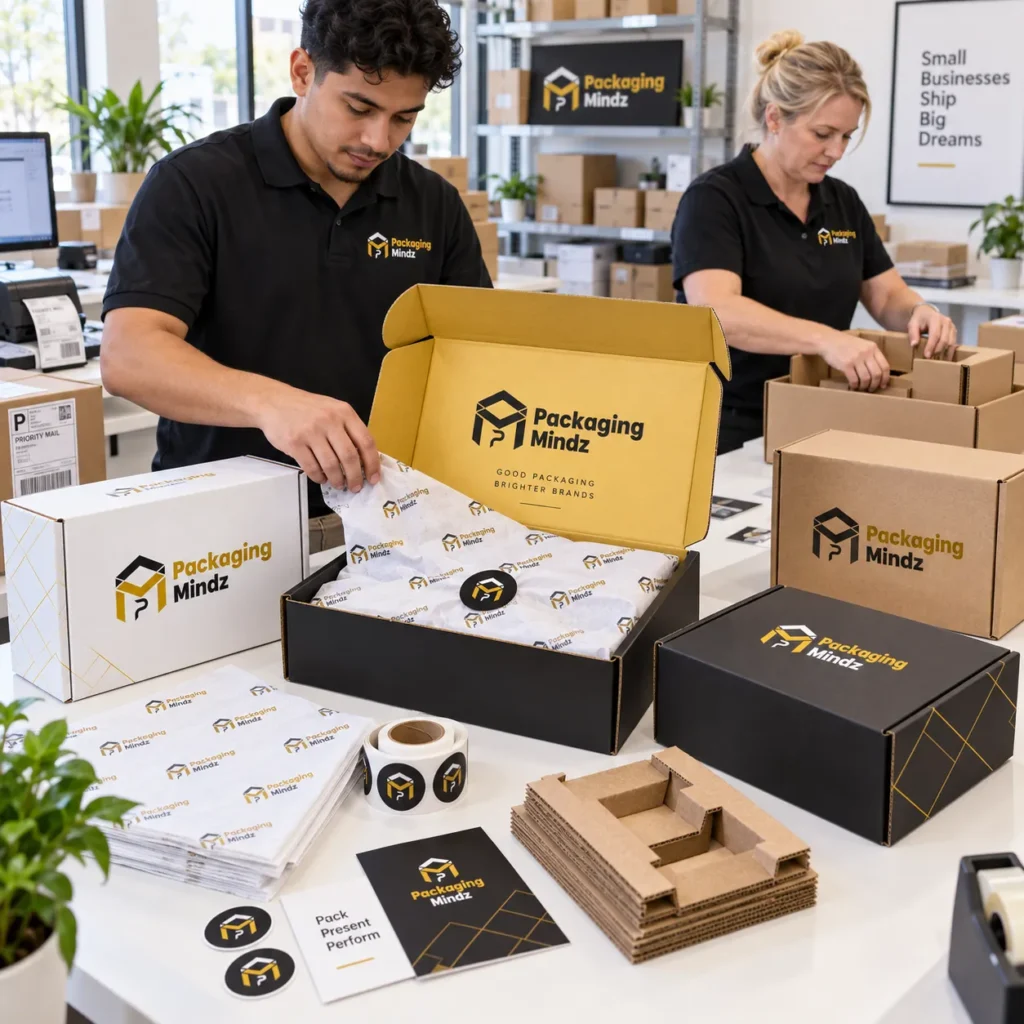
| Multi-item orders | Mailer boxes with tissue | Keeps several products organized |
The format should match the job. A thin retail carton may look polished on a shelf, but it should not be treated as parcel protection unless the full shipping setup supports that use.
A heavy sweatshirt, structured shirt, soft scarf, and pair of denim jeans can have similar widths but very different packed depths. Measure the product after it is folded and prepared for sale.
Include tissue, tags, cards, belly bands, or accessories that sit inside the package. The fold matters. A close fit can limit empty space and movement, while enough clearance keeps clothing from being squeezed. Several product types may need separate packaging sizes instead of one oversized carton.
Material changes stiffness, print appearance, storage, and how the package feels in hand. Packaging Mindz can discuss paperboard, kraft stock, corrugated board, and rigid board based on the garment and its sales channel.
Paperboard suits many lightweight retail cartons and gives artwork a smooth print surface. Kraft offers a natural paper appearance. Corrugated board adds structure for mailer packaging and heavier orders. Rigid board suits gift-focused or more formal apparel presentation.
Coatings, windows, adhesives, and mixed components can affect recyclability, so environmental claims should be based on the complete package.
Your logo, colors, collection name, care message, website, social handle, or interior artwork can be placed where the structure allows. CMYK works well for detailed, full-color graphics. PMS references can support tighter brand color control when the production method allows it.
Paper color, coating, and finish affect printed appearance. Details matter here. We can also review dielines and artwork placement before production so folds, bleed areas, panel orientation, and logo positions are considered before the packaging moves forward.
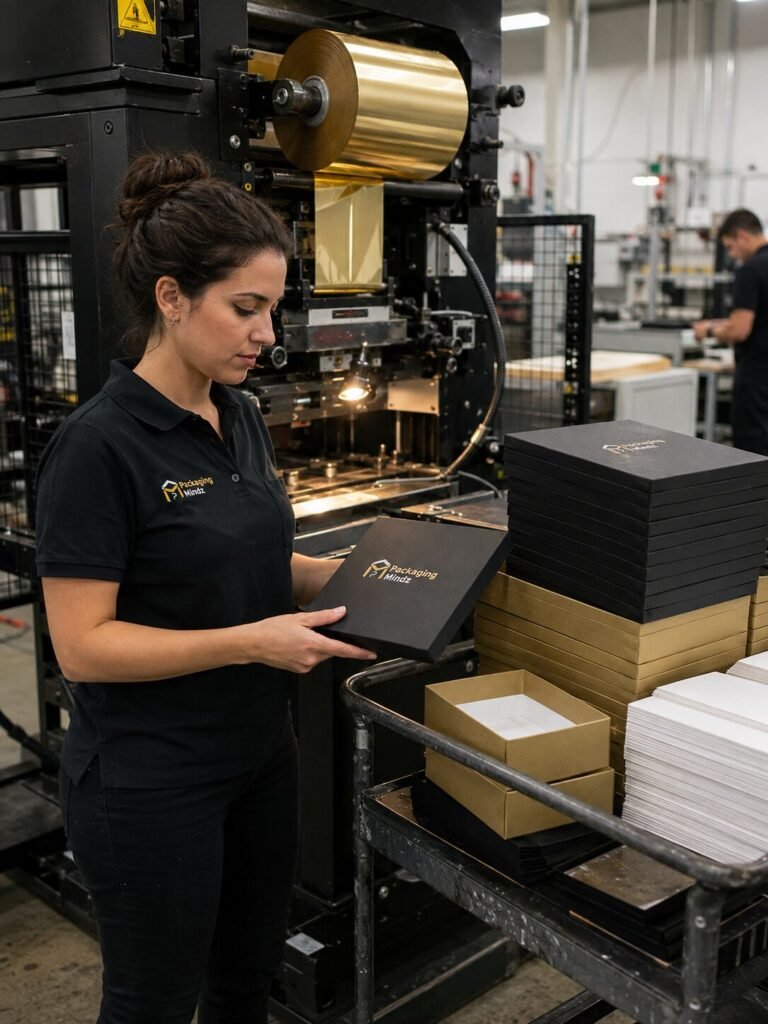
Matte and gloss lamination change surface feel and reflectivity. Soft touch creates a smoother hand feel, while foil, embossing, debossing, and Spot UV can add controlled detail to logos or selected graphics. Die cut windows suit some retail concepts. Tissue, ribbon, sleeves, and inserts are more useful when the goal is organized presentation inside the package.
The inside of apparel packaging can affect packing speed, garment movement, and how easily a customer repacks an item. Branded tissue can wrap folded clothing without adding a fixed internal structure, while belly bands can hold a folded piece together.
Printed cards can carry care details, return directions, loyalty messaging, or product information without crowding the outer box. Keep it practical. If customers may reuse the original package for a size exchange, mention that during structural planning so opening and reclosing are considered.
Fashion packaging changes with seasons, launches, colorways, and capsule collections. Decide which parts should stay consistent and which can change without rebuilding the entire package. One brand may keep a core box and update the sleeve, sticker, tissue, or insert for each collection. Another may need separate boxes for T-shirts, hoodies, and bundled sets. Keep approved dimensions, artwork versions, and finish choices organized by SKU so repeat orders are easier to specify.
Packaging Mindz starts custom orders at 100 units and has no fixed maximum order quantity. Smaller labels can begin with a controlled run, while growing programs can quote larger volumes.
Material, structure, printing, finish, and quantity all influence unit pricing. Payment can be made by card, invoice, or Zelle. If you need several sizes or artwork versions, list each quantity separately so the quote reflects the real order.
General production time is 15 to 25 days. Rush production is available in 5 to 7 days for qualifying orders, while some confirmed projects may qualify for an approximately 3 to 5 day option.
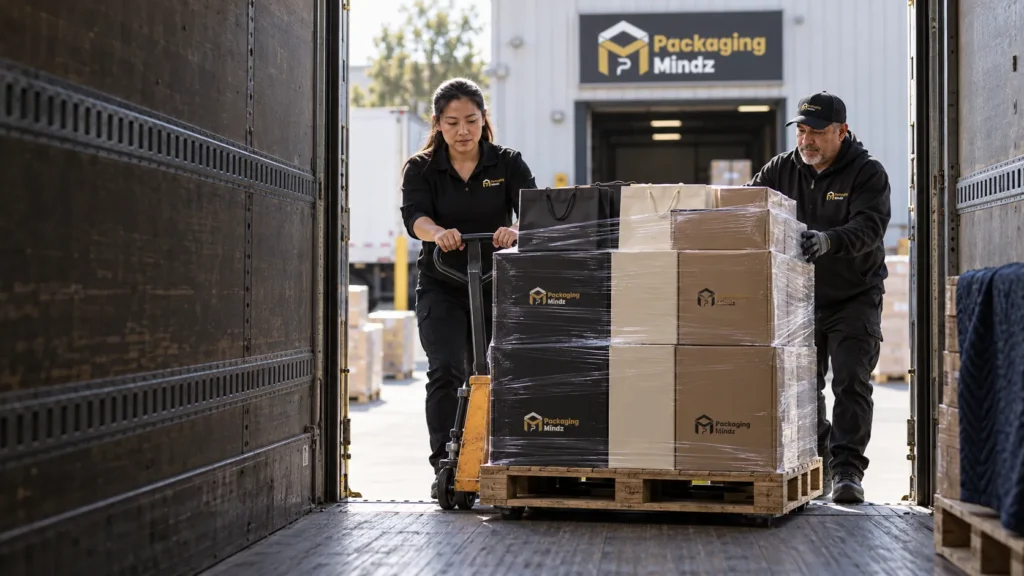
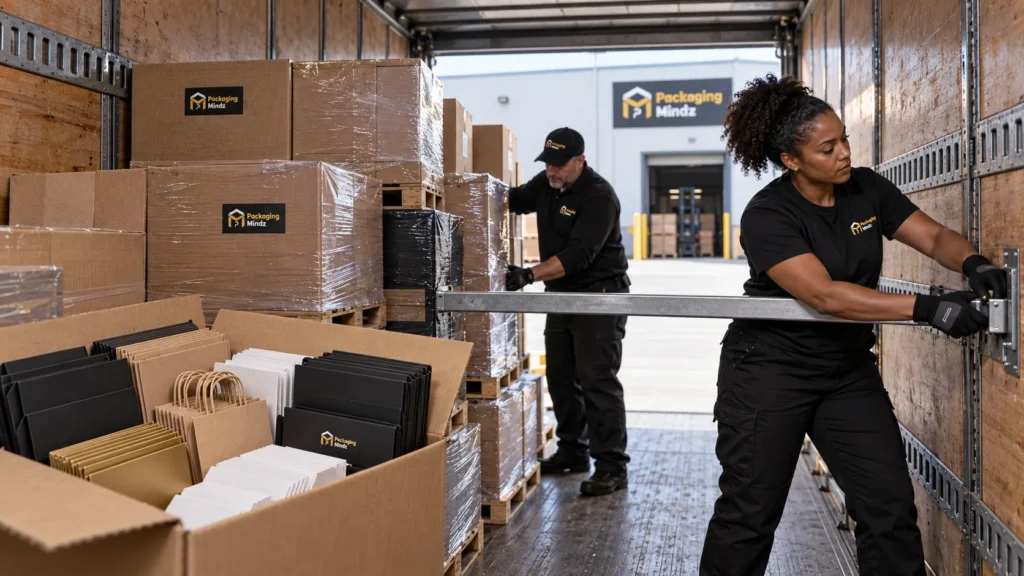
Production and transit are separate. Packaging Mindz offers free shipping, with air freight and sea freight available. Share your collection launch or retail deadline when requesting pricing so the schedule can be reviewed against that date.
A useful packaging brief connects the garment, structure, artwork, and order plan. We can review folded dimensions, box style, opening method, logo placement, materials, finishes, internal pieces, quantities, and timing before production.
You do not need every technical term figured out. Bring the product details and the result you want. We can turn those inputs into a packaging specification for quoting and review.
The contents of your box will impact its appearance, packaging, and shelf performance. All custom retail-boxes projects at Packaging Mindz begin with a material suggestion that considers your product, retail environment, and budget. In this volume, we present the following, which we use:
The standard for most retail packaging. Printable, lightweight, and cost-effective at volume.

Uncoated, natural-looking, and preferred by brands communicating sustainability or an artisan positioning.

Added wall protection for heavier or fragile products without sacrificing print quality.

The material behind premium two-piece boxes. Provides stiffness and weight that signals quality.

FSC-certified boards and recycled materials for brands with sustainability commitments or environmental certifications required by retailers.
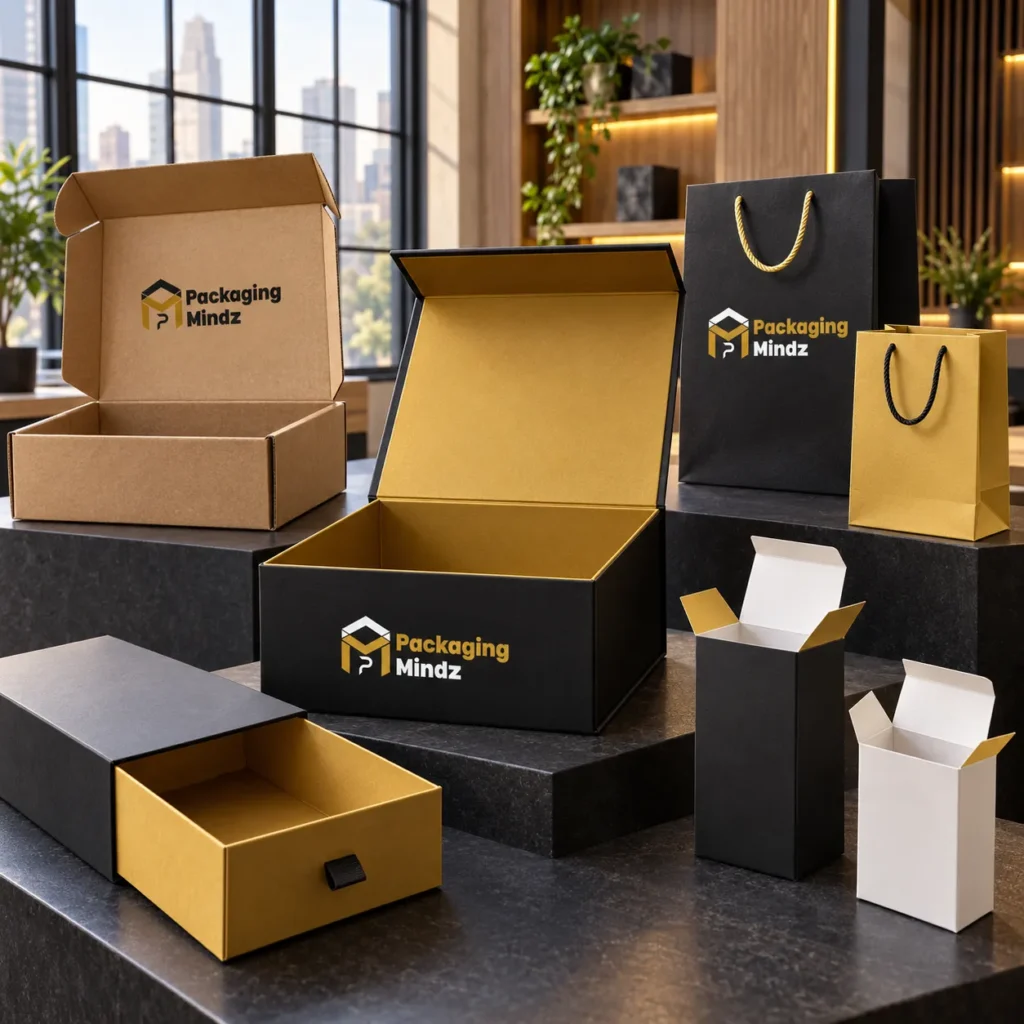
Color accuracy isn’t optional in retail. When your product sits next to a competitor’s on the same shelf, your print needs to hold up. We use CMYK and PMS color systems to reproduce your brand colors accurately, batch after batch.
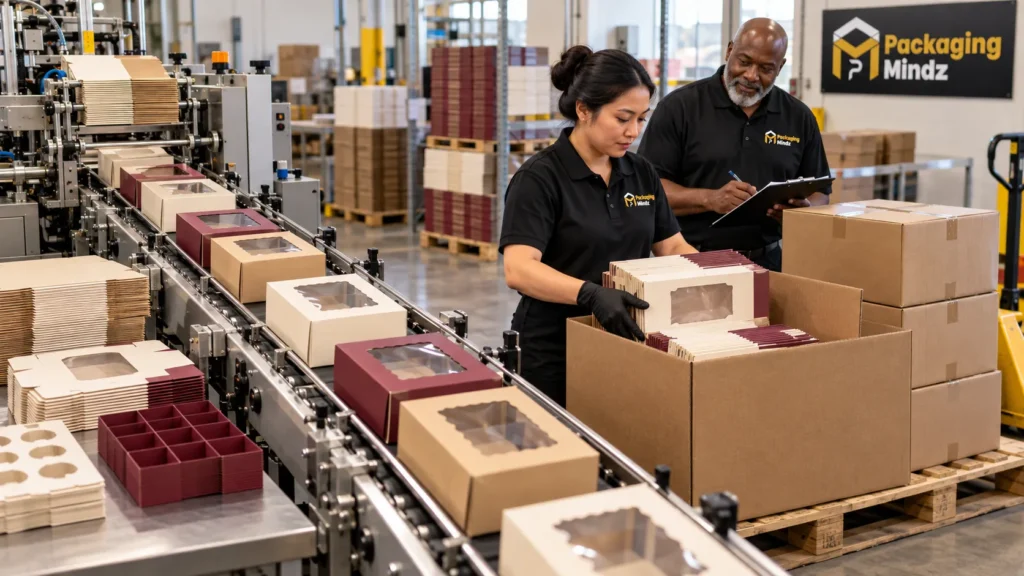
Custom printed retail boxes through Packaging Mindz support full-surface printing across every panel, including the base. If your brand experience continues when the box opens, we can print the interior as well. Bold graphics, lifestyle photography, clean typographic layouts- our process handles all of it without compromise.
Tell us your product type, preferred box style, quantity, and any artwork you have ready. Reach us by phone, WhatsApp, or through our quote form.
We review your project and send back a detailed quote covering material, printing, finish, and production timeline, no pressure, no obligation.
We prepare your dieline or review your submitted artwork. Nothing goes to press until you've reviewed and approved the design.
At Packaging Mindz, there are no standard templates and no sizes you have to settle for. Every box we manufacture is built to your exact specifications, your dimensions, your material, your print, and your finish. You decide how the packaging looks, how it feels, and how it protects your product. We handle production from there. The result is packaging that fits your product and represents your brand exactly as intended.
Every custom retail box is built to your product's dimensions, not the nearest standard mold.
CMYK and PMS printing ensures your brand colors stay consistent across every production run.
From basic lamination to soft-touch, foil stamping, and embossing, all available in-house.
Kraft stock, recycled boards, and FSC-certified materials available on request.
We check your artwork, prep your dieline, and flag issues before production begins.
One person manages your project from quote to delivery, no handoffs, no confusion.
Corrugated mailer boxes are practical for many apparel shipments because they provide more structure than retail cartons. Final selection depends on garment weight, order size, and transit conditions.
Yes, clothing boxes need practical clearance for folding, tissue, tags, and packing. Excess space should be limited because garments can shift and presentation becomes less controlled.
One package can cover several garment sizes when folded dimensions stay close. Bulky items, layered sets, or different product categories often require separate box depths or footprints.
Yes. Return instructions can be printed on an insert, card, interior panel, or another suitable area. Keep them readable and separate from seasonal artwork that may change.
Kraft-based apparel boxes may be recyclable, but acceptance depends on the complete package and local rules. Laminates, foils, windows, adhesives, and mixed materials can affect processing.
Send Packaging Mindz your garment type, folded dimensions, quantity, artwork, preferred format, and target deadline. For several SKUs, list the sizes and quantities separately. Call 713 338 0505 to discuss your custom apparel packaging project and receive pricing based on your specifications.