
Description
Bubble Wrap Rolls, Sheets, Bags, and Pouches
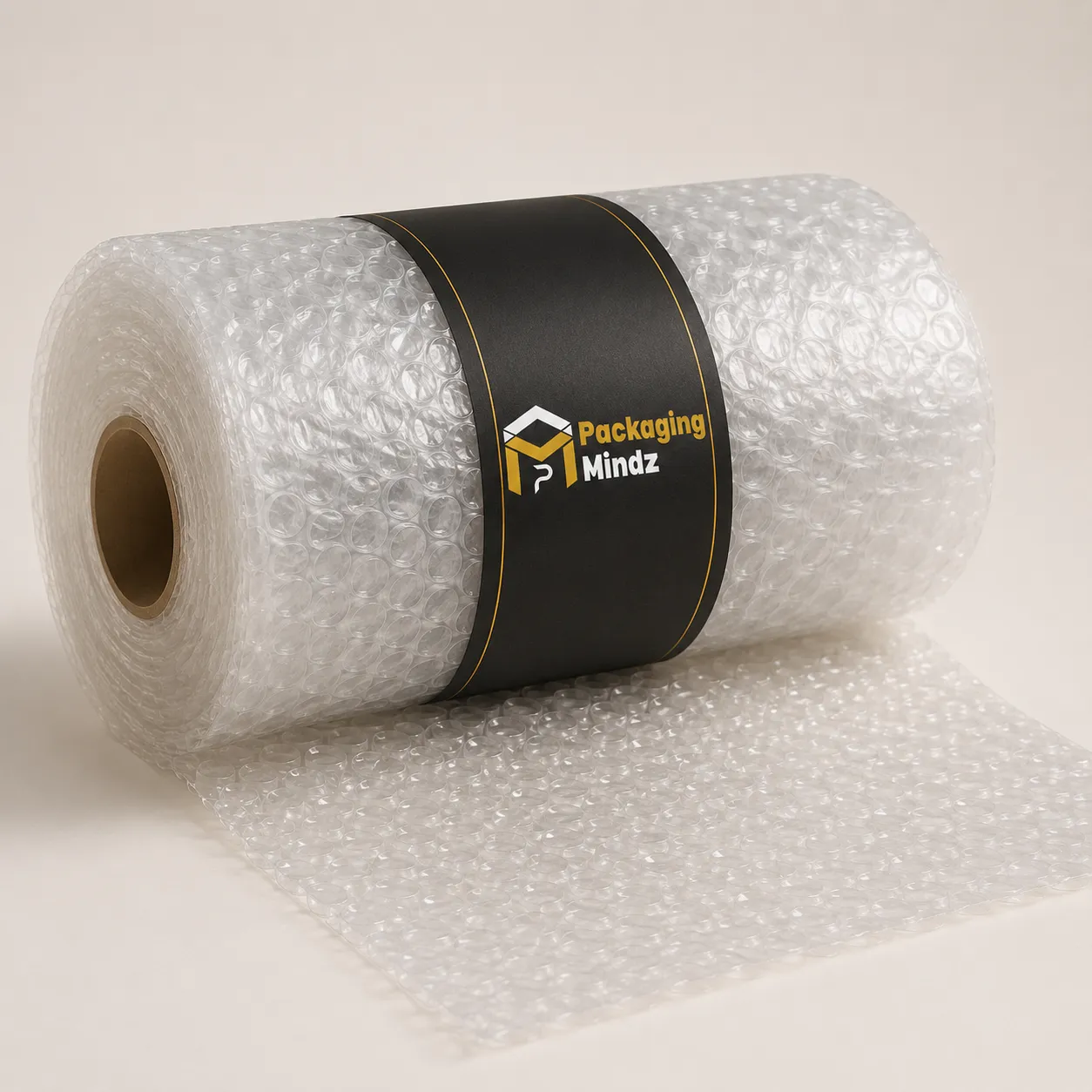
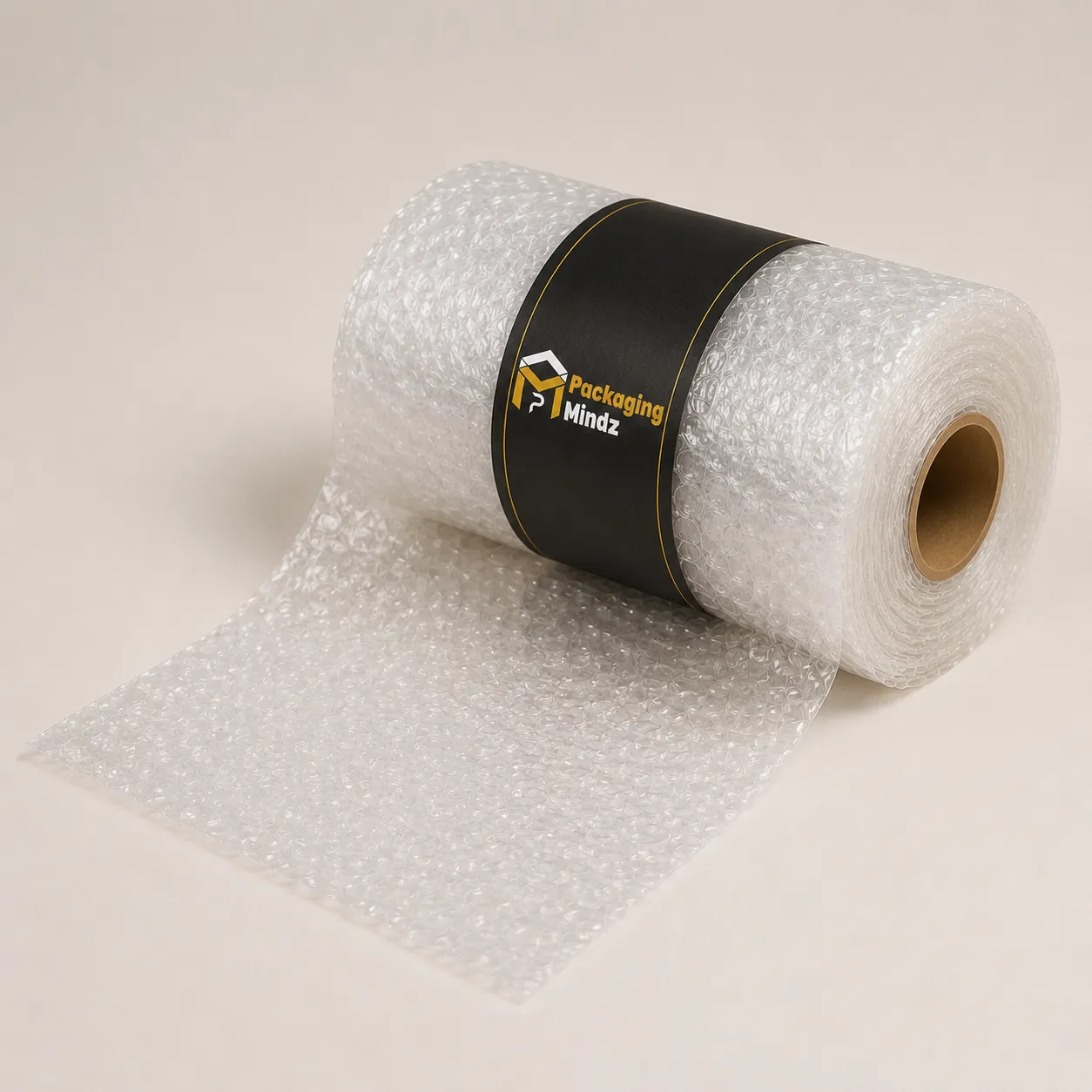
A loose product can turn delivery into a replacement. Bubble wrap adds a flexible air cell layer before goods enter outer cartons. Across the United States, Packaging Mindz supplies rolls, sheets, bags, and pouches for sellers, retailers, warehouses, manufacturers, movers, and fulfillment teams.
Your order can be specified by roll width, length, bubble profile, sheet size, perforation, bag dimensions, closure style, and quantity. We help you match the format to your product, shipping carton, and packing method. That keeps packing consistent.
Send your product dimensions and monthly usage for a practical bubble wrap quote.
Choose the Bubble Wrap Format That Fits Your Packing Line
The right format depends on product shape, storage space, and how often staff repeats the task. One format rarely fits every SKU. Warehouses wrapping mixed orders may need rolls, while repeat products may move faster in sized pouches.
Bubble Wrap Rolls
Staff cut rolls to fit mixed products. Custom widths can reduce trimming and unused film at the bench. Perforations placed at regular intervals make separation quicker without requiring scissors for every package.
Bubble Wrap Sheets
Sheets give workers a measured piece each time. They work well when one product needs a repeatable wrap pattern, such as a bottle, frame, ceramic part, or boxed accessory. Fixed sheet dimensions also make material usage easier to forecast across daily orders.
Bubble Bags and Pouches
Bags reduce folding and tape use. Flush cut, open top, self-seal, or zipper styles suit different workflows. Each product still needs a correctly sized outer carton that restrains it throughout warehouse handling and transport.
Ask Packaging Mindz to compare rolls, sheets, and pouches for your packing volume.
Which Bubble Size Should You Use?
Bubble height changes how film behaves around a product. Small cells conform closely and cover surfaces. Larger cells add cushioning depth and fill space, but occupy more room inside the carton. Product weight, sharp edges, and empty carton space all affect the result.
| Bubble profile | Practical use | Selection concern |
| Small bubble, often 3/16 inch | Glassware, cosmetics, small parts, coated surfaces | Wraps corners closely but offers less cushioning depth |
| Medium bubble, often 5/16 inch | Mixed ecommerce goods and moderately fragile products | Needs enough carton clearance around every side |
| Large bubble, often 1/2 inch | Larger items, void areas, and deeper cushioning | Adds bulk and may be wasteful around small products |
These profiles are starting points, not a damage guarantee. Packing trials reveal whether the film shifts, loses air, or compresses too far under the product’s weight.
Film, Surface, and Specialty Protection Choices
Standard bubble cushioning commonly uses flexible polyethylene film with sealed air cells. Film thickness and cell construction affect handling. Polished finishes may need a smooth layer between the product and bubbles to avoid pressure marks.
Electronics require a separate decision. Pink anti-static cushioning can reduce charge buildup around certain sensitive parts, but the complete method depends on the component’s electrostatic discharge requirements. Ordinary clear film isn’t a substitute. Sharp corners may require edge guards, corrugated pads, foam, or a soft first layer. Bubble film cushions impact. It does not replace a suitable outer box, closure tape, or void fill.
Specify Width, Perforation, and Bag Dimensions
Start with the product’s length, width, depth, weight, and vulnerable areas. Then measure available carton space. A narrow roll creates extra seams, while an oversized sheet adds folds, material, and packing time. Width affects labor, too.
Pouches need room for insertion and closure, without allowing movement. Tell us about exposed corners, painted surfaces, retail cartons, and protruding parts. Those details affect the specification.
Packing trials should check four points:
- The wrap stays around the product during handling.
- The item does not move freely inside its carton.
- Corners and pressure points remain covered.
- The package closes normally without bulging the carton walls or crushing air cells.
Bubble Wrap for Retail, Ecommerce, and Industrial Orders
Online sellers use rolls and pouches for ceramics, candles, cosmetics, accessories, collectibles, and home goods. Retailers wrap store transfers. Manufacturers use measured sheets for parts moving between workstations and customers.
Packing volume changes the choice. Small teams may prefer perforated rolls. Busier lines may benefit from precut sheets or bags that remove measuring. Inflatable systems save storage space, but equipment, compatible film, and output need review.
Can I Order Wholesale Bubble Wrap?
Packaging Mindz accepts orders starting at 100 units, with the unit confirmed as rolls, sheets, bags, or another agreed format. There is no fixed maximum order quantity. Volume pricing depends on dimensions, film specification, perforation, closure, quantity, and production requirements rather than quantity alone.
For several products, send a SKU list. We can identify where one roll width or pouch size covers multiple items without creating excessive waste. It keeps purchasing simpler.
Why Buy Bubble Wrap from Packaging Mindz?
We begin with your packing process. Bring us product measurements, carton sizes, current material usage, and known damage points. We’ll use that brief to narrow the format and specification. Our team can discuss bubble cushioning and the outer cartons that carry it within one brief. Repeat buyers can document approved roll, sheet, and pouch dimensions for later runs.
Request a Bubble Wrap Quote Today!
Send the required format, bubble profile if known, roll or bag dimensions, quantity, product weight, outer carton size, and deadline. Photos of the packed item can clarify corners and exposed surfaces.
Reviews
There are no reviews yet.