
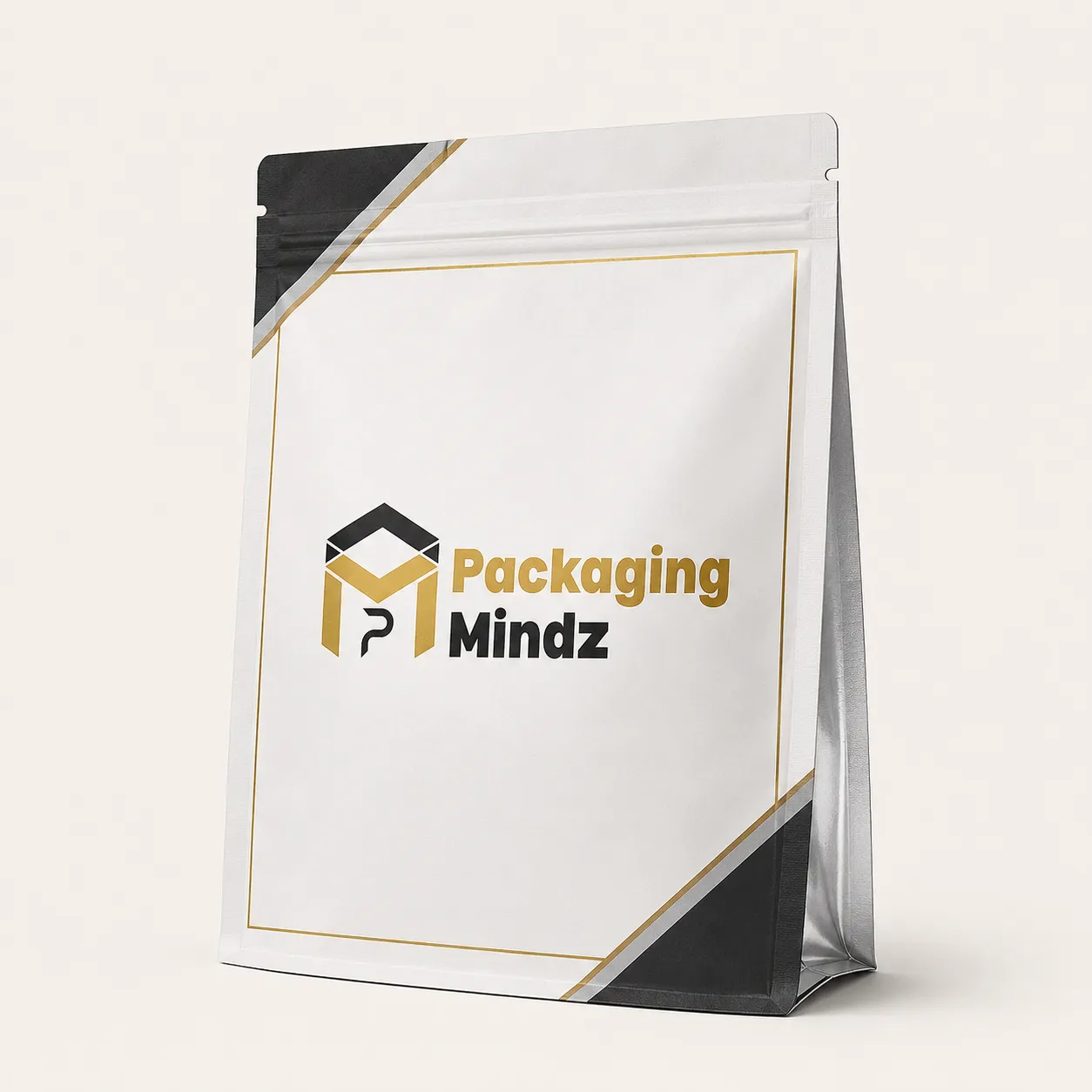
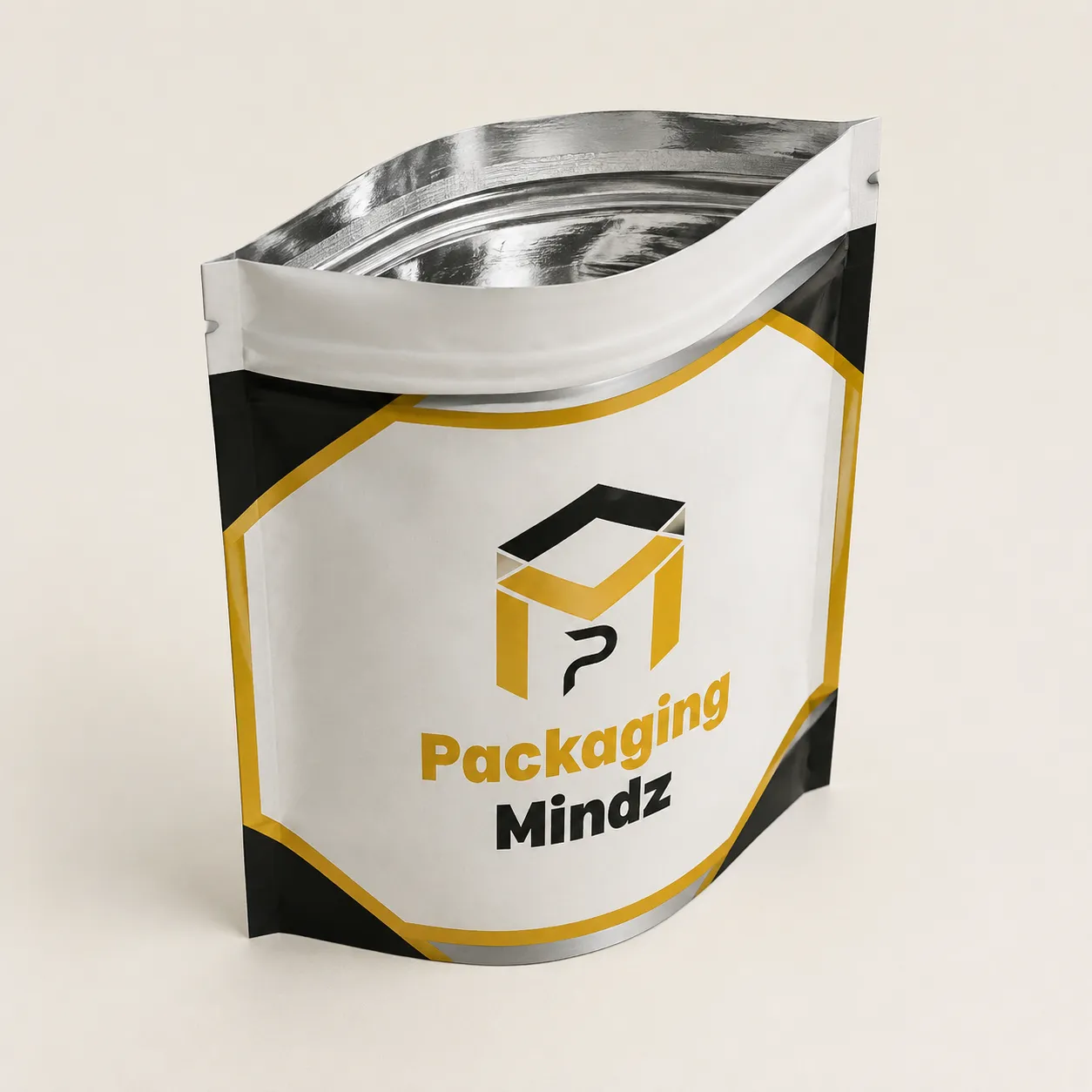
Description
Custom Aluminum Foil Printed Paper Bags
Products affected by light, air, odor transfer, or moisture need more than a basic paper pouch. Packaging Mindz produces aluminum foil printed paper bags with layered structures selected around your contents, filling method, storage conditions, and retail presentation.
You can order custom dimensions, printed branding, resealable zippers, tear notches, hanging holes, valves, and heat seal areas. These bags work well for coffee, loose leaf tea, dry snacks, spices, powdered products, pet treats, and selected nonfood goods.
The right specification begins with the product. Send us its weight, dimensions, expected storage period, artwork, and preferred closure to receive a custom quote.
Which Aluminum Foil Bag Format Fits Your Product?
The pouch format affects shelf stability, filling speed, storage space, and how the package sits on a retail display. We’ll help you compare structures instead of pushing every product into one standard bag.
Stand Up Foil Pouches
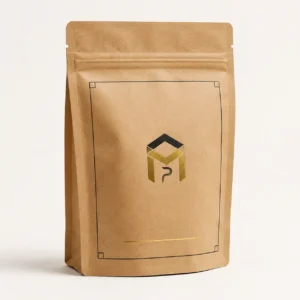
A bottom gusset allows the package to sit upright once filled. This format suits coffee, granola, nuts, confectionery, powdered mixes, and products displayed on shelves. A zipper can be placed below the heat seal area when repeated opening is expected.
Flat and Three Side Seal Bags
Three side seal bags arrive closed along three edges, leaving one side open for filling. Their compact shape works for samples, spices, single portions, supplements, masks, hardware parts, and other lightweight contents.
They take little storage space. That matters when hundreds of empty bags must fit near a packing station.
Side Gusset and Quad Seal Bags
Side gussets create more internal room without making the pouch unusually wide. Coffee roasters and dry food producers often select this format for larger fill weights. Quad seal construction can provide a more defined shape and broader panels for branding.
Flat Bottom Pouches
A flat base and structured side panels give this pouch a boxlike profile. It provides several printable surfaces and suits retail products that need an orderly shelf presence. Exact construction depends on the required capacity and barrier specification.
Materials for Aluminum Foil Printed Paper Bags
These bags use several bonded layers, with each layer performing a different job. The outside may use kraft paper, coated paper, or a printable film. An aluminum foil or metallized barrier layer sits within the structure, while the inside sealant layer closes under controlled heat.
Material selection depends on the contents. Ground coffee, whole beans, powders, oily snacks, and aromatic spices don’t place the same demands on a pouch. The required barrier should be discussed alongside the intended storage period and filling process.
Natural kraft creates a familiar paper appearance, while white kraft provides a cleaner base for colored graphics. A smooth film surface can carry detailed artwork and photography. True aluminum foil and metallized film aren’t identical, so we’ll specify the layer after reviewing your protection needs.
For food applications, tell us whether the contents will touch the inner layer directly. Food contact requirements must be reviewed for the exact material, ink system, adhesive, contents, and intended use. We don’t apply blanket compliance claims to every structure.
Custom Printing That Keeps Your Brand Recognizable
Your aluminum foil printed paper bag can carry a logo, product name, flavor, weight statement, preparation details, barcodes, and other supplied label information. Front, back, and side panels may be used according to the chosen pouch format.
CMYK printing suits detailed graphics and multiple colors. PMS references may support tighter control for specific brand colors when the material and process allow it. Color appearance can still shift between kraft, white paper, film, matte surfaces, and glossy finishes.
We can review your artwork against the dieline before production. This catches misplaced seals, text sitting inside gussets, weak barcode contrast, and graphics positioned too close to trim areas. You’ll see where each printed element belongs before the full run begins.
Surface Finishes and Functional Additions
A finish changes both appearance and handling. Matte surfaces soften glare and create a restrained retail look. Gloss finishes produce stronger reflection and deeper looking colors. Spot UV can add selective shine to a logo or graphic area when compatible with the outer layer.
Useful pouch additions include:
- Resealable zipper closures
- Tear notches for easier opening
- Hanging holes for peg displays
- Clear windows where the structure permits
- Degassing valves for applicable coffee products
- Rounded corners for comfortable handling
- Heat seal space above the zipper
- Custom gussets for increased capacity
A window changes the barrier structure because part of the foil layer is removed or replaced. It should be selected only when product visibility matters more than complete light blocking.
How Should You Choose the Bag Size and Barrier?
Nominal weight isn’t enough for accurate sizing. Eight ounces of dense powder occupies a different volume from eight ounces of roasted coffee beans. Product shape, trapped air, headspace, zipper placement, and the sealing area all affect the finished dimensions.
Send a filled product sample when possible, or provide the product volume alongside its weight. We’ll also need to know how the pouch will be filled. Manual scooping, funnel filling, and automated equipment can require different opening widths and seal allowances.
Barrier selection deserves the same care. Aluminum foil layers are commonly used where stronger resistance to light, moisture, oxygen, or aroma transfer is needed, though performance depends on the full laminate and seal quality. Flexible foil pouches are commonly sold for coffee, food, supplements, snacks, and cosmetics, while multilayer structures use separate printable, barrier, and sealant layers for different functions.
Why Business Use Aluminium Foil Printed Paper Bag?
Coffee roasters use foil structures for whole beans and ground coffee, sometimes with a valve chosen around the packing process. Tea companies use them for loose leaves, blends, and refill packs. Snack makers order gusseted bags for nuts, dried fruit, granola, and confectionery.
The format also serves spice brands, powdered drink companies, supplement sellers, pet treat businesses, and sample programs. Nonfood applications may include bath salts, small components, testing materials, or items sensitive to light and humidity.
The specification changes with the contents. A bag made for dry tea shouldn’t be assumed suitable for liquid products, hot filling, retort processing, freezing, vacuum packing, or medical use.
Why Partner With Packaging Mindz?
Bag development starts with your contents and filling process, not a copied stock specification. Our team can review dimensions, gusset depth, closure placement, seal space, artwork position, and the number of product designs within one packaging brief.
You don’t need to know every laminate term before requesting pricing. Tell us what you’re packing, how much goes inside, where it will be sold, and what problems the bag needs to address. We’ll turn that information into a workable specification.
Request a Quote for Custom Aluminum Foil Printed Paper Bags
Send Packaging Mindz your required quantity, fill weight, product type, preferred pouch format, dimensions, artwork, closure requirements, and deadline. Photos or an existing bag sample can help us understand the construction you want.
Call 713 338 0505, message 626 323 6829 on WhatsApp to request pricing.
Reviews
There are no reviews yet.